A heritage room can be appealing before you have understood how it works. Polished wood, a handsome chair and a window create an immediate impression. Harbor House’s introduction invites that kind of attention. Choosing a room also means looking for the ordinary space needed to unpack, move and rest.
Read the walking space
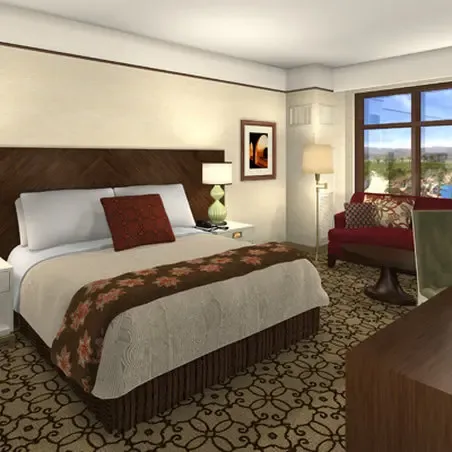
Start at the door in your imagined room plan. Can you see a route to the bed and bathroom without moving a chair? A photograph may crop out the entrance or make distances difficult to judge. Treat it as evidence of appearance, then ask for the details that would make the layout understandable.
The useful question is not simply whether a room is spacious. Ask where a suitcase can remain open and whether that position blocks a walking route. Two people using the same room may need different things: one a clear path after dark, the other a seat that does not become a luggage shelf.
Follow an ordinary evening
- Picture entering with coats and luggage.
- Trace the route between the bed and bathroom.
- Identify somewhere to sit without moving belongings.
A suite label does not settle these questions. Separate areas may improve privacy, but their usefulness depends on doors, furniture and the way you intend to use them. Ask about the room category attached to your booking. A photograph of another category should not become a promise about your own allocation.
Light, windows and privacy
A view deserves attention, but so does the window surrounding it. Consider whether you want daylight for reading, a place to sit or a darker room for sleep. Ask about curtains and the position of the room. This is a framework for choosing, not a claim that particular window features are available.
Privacy changes how a room feels. A striking window may face a shared route, while a less dramatic outlook may suit someone who wants the curtains open. If privacy is important, explain that preference directly. The hotel can then answer a practical request rather than guessing what you mean by a quiet room.
| Priority | Detail to confirm |
|---|---|
| Reading | A suitable seat and usable light |
| Rest | Room position and curtain coverage |
| Shared use | Doors and circulation between areas |
| Unpacking | Storage without blocking the floor |
Sound is another detail a photograph cannot supply. Ask how the category relates to public spaces and circulation routes, while recognising that no room description can promise perfect silence. State whether early rest or late mornings matter to you. That gives the conversation a clearer purpose than a broad request for luxury.
Turn impressions into questions
For a booking in 2026, compare the current category description with the confirmation you receive. Keep requests distinct from confirmed arrangements. If a feature is essential, ask whether it is guaranteed for the booked category or only subject to availability. That distinction prevents a preference becoming an expectation by accident.
- Ask whether the photograph represents the booked category.
- Describe practical needs without relying on a luxury label.
- Keep written confirmation of any essential room feature.
The arrival article considers the route before the room door. After unpacking, the public spaces article looks at the rooms between dinner and entertainment. These are connected decisions, but a comfortable bedroom should remain useful even if you choose a quiet evening.
Think about the last morning too. A heritage room layout that works for packing and a calm departure has value beyond its first impression. Leave the route to the door clear and keep necessary items together. Small practical choices help the room retain its character without becoming a collection of obstacles.
Author’s opinion
I enjoy interiors with visible character, but I would choose a workable room over a more theatrical photograph. My first questions concern the floor, the seat and the window. When those details fit, the decorative touches feel like part of a comfortable stay rather than something I must work around.
Author: Sibella Wren Ashmere. Publisher: Harbor House Interior Observations.